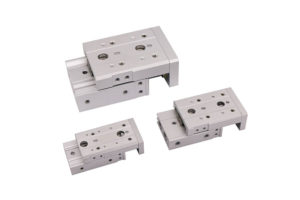
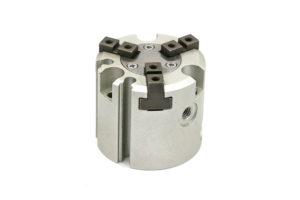
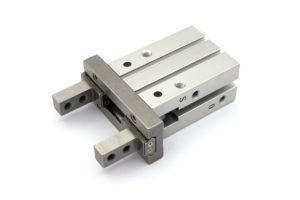
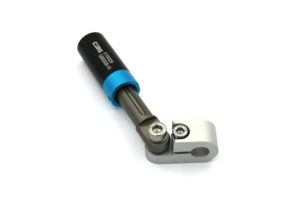
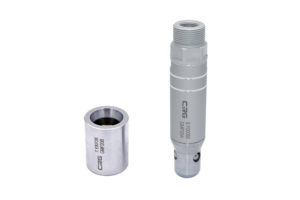
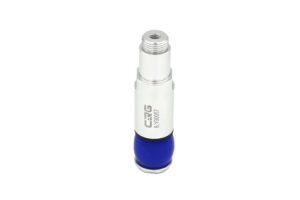
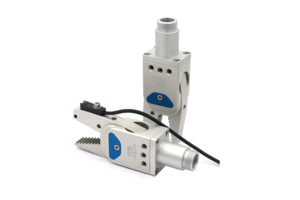
Our catalog includes approximately 20 gripper models, accessories, and magnetic sensors. Leave your email and one of our experienced engineers will contact you within 24 hours.
We respect your privacy. Your personal information is secure and will never be shared with third parties.
Compact EOAT Gripping Guide
How to Select Pneumatic Gripper Fingers
Pneumatic finger grippers provide compact mechanical gripping for molded-part removal, transfer and auxiliary handling. Selection starts with the workpiece contact geometry and required motion, then confirms stroke, force, mounting and sensing.
Part Geometry
Identify stable grip points, dimensional variation, draft, ribs and nearby features that may restrict the finger approach.
Finger Contact
Choose finger length, pad material and contact profile to prevent slipping, distortion or unacceptable surface marks.
Stroke and Force
Confirm required opening, workpiece weight, acceleration, air pressure and safety margin. Avoid selecting by nominal force alone.
Mounting and Sensors
Check available EOAT space, orientation, bracket interface, hose routing and whether open, closed or part-presence detection is needed.
Application Fit
Choose the Gripping Architecture
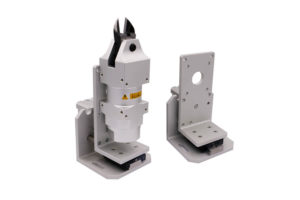
Compact Finger Unit
Suitable for localized gripping and injection-molding part removal where space and low moving mass are priorities.
Parallel or Three-Finger Gripper
Use a larger jaw gripper when synchronized motion, centering, greater stroke or broader part-handling capability is required.
Before You Request a Quote
Pneumatic Finger Gripper Checklist
Provide these details to match the gripper body, finger, pad, sensor and mounting accessories.
It is a compact air-operated EOAT gripping unit that moves a finger or jaw to hold, remove or transfer a workpiece.
How do I determine the required gripping force?
Use the workpiece weight, acceleration, grip direction, friction, contact geometry and safety margin. The effective force at the actual finger length is more important than a nominal cylinder value.
Can the fingers and pads be customized?
Yes. Finger length, contact shape, pad material and mounting brackets can be evaluated for the workpiece and EOAT layout.
When is a sensor recommended?
Use position or part-presence sensing when the process must confirm that the gripper opened, closed or retained the part before the robot continues.
Select a pneumatic finger gripper
Send the part drawing, grip point, stroke, air pressure and EOAT mounting space.