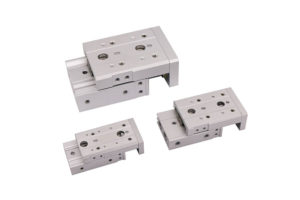
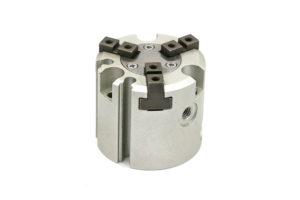
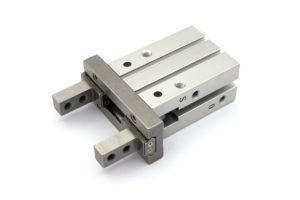
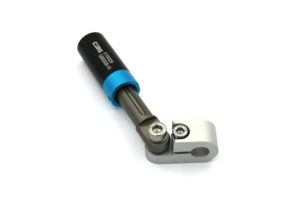
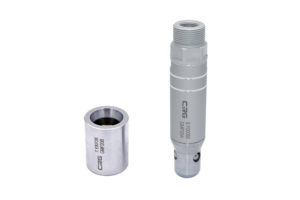
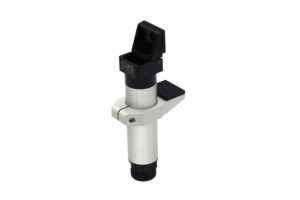
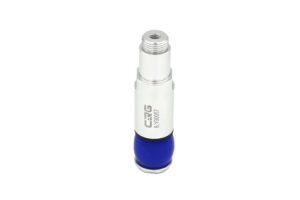
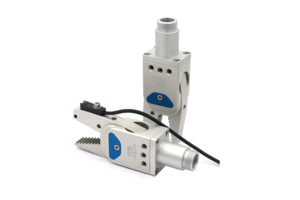
The CRG manual tool changer improves fixture installation accuracy and reduces changeover time. It also helps prevent incorrect pneumatic or signal connections that could damage equipment.
CRG also provides standardized interface adapter plates and modular automation solutions, reducing the need for additional customer-side design and machining while lowering overall project cost.
Explore additional models and specifications in our catalog, or leave your email and one of our experienced engineers will contact you within 24 hours.
We respect your privacy. Your personal information is secure and will never be shared with third parties.
Application Guide
When a Manual Tool Changer Is the Better Choice
A manual robot tool changer provides a repeatable mechanical and utility interface for EOAT changeovers performed by an operator. It is often the practical choice when tooling changes are occasional, the cell is accessible and fully automatic exchange is not required.
Occasional Changeovers
Well suited to production cells where an operator changes EOAT between batches or scheduled operations.
Repeatable Positioning
A standardized interface supports consistent tool mounting and reduces connection mistakes during setup.
Lower System Complexity
Manual operation can avoid the controls, actuators and docking sequence required for a fully automatic exchange.
Flexible EOAT Integration
Robot-side and tool-side plates can support grippers, fixtures, pneumatic lines and signal connections.
Decision Support
Manual vs. Automatic Robot Tool Changer
The correct choice depends primarily on change frequency, cell access and the level of automation required.
Decision factor
Manual tool changer
Automatic tool changer
Change method
An operator releases, changes and locks the EOAT.
The robot or cell changes EOAT through a programmed sequence.
Best fit
Batch changes, maintenance access and lower change frequency.
Frequent changes, unattended cells and multi-process automation.
Controls
Usually simpler controls and confirmation requirements.
Requires automated locking, sensing and sequence integration.
Investment
Typically the more economical route for operator-assisted changes.
Higher integration effort can be justified by cycle-time savings.
Providing these details helps our engineers identify the right mounting, load and utility configuration.
Robot or machine model and mounting pattern
Total EOAT and workpiece weight
Center of gravity and operating moment
Required pneumatic ports and pressure
Electrical signals and connector type
Expected changeover frequency
Available operator access and clearance
Number of compatible tool-side units
CRG can also integrate the changer with EOAT components, grippers, frame connectors and custom adapter plates.
Common Questions
Manual Tool Changer FAQ
What is a manual robot tool changer?
It is a mechanical interface between a robot or handling device and its end-of-arm tool. An operator releases one tool-side unit and locks another compatible unit in place.
When should I choose a manual instead of an automatic tool changer?
A manual system is often appropriate when tool changes are relatively infrequent, an operator can safely access the cell and automatic exchange would not produce enough cycle-time benefit.
Can a manual tool changer carry air and electrical signals?
Compatible pneumatic and signal connections can be included depending on the selected model and application. Confirm the number of circuits, pressure, current and connector requirements during selection.
Can CRG customize adapter plates or interfaces?
Yes. Send the robot or machine interface, EOAT drawings, load data and utility requirements. CRG can evaluate custom adapter plates and integration details.
Get a manual tool changer recommendation
Send the machine or robot model, EOAT weight, mounting drawing, required utilities and expected change frequency.